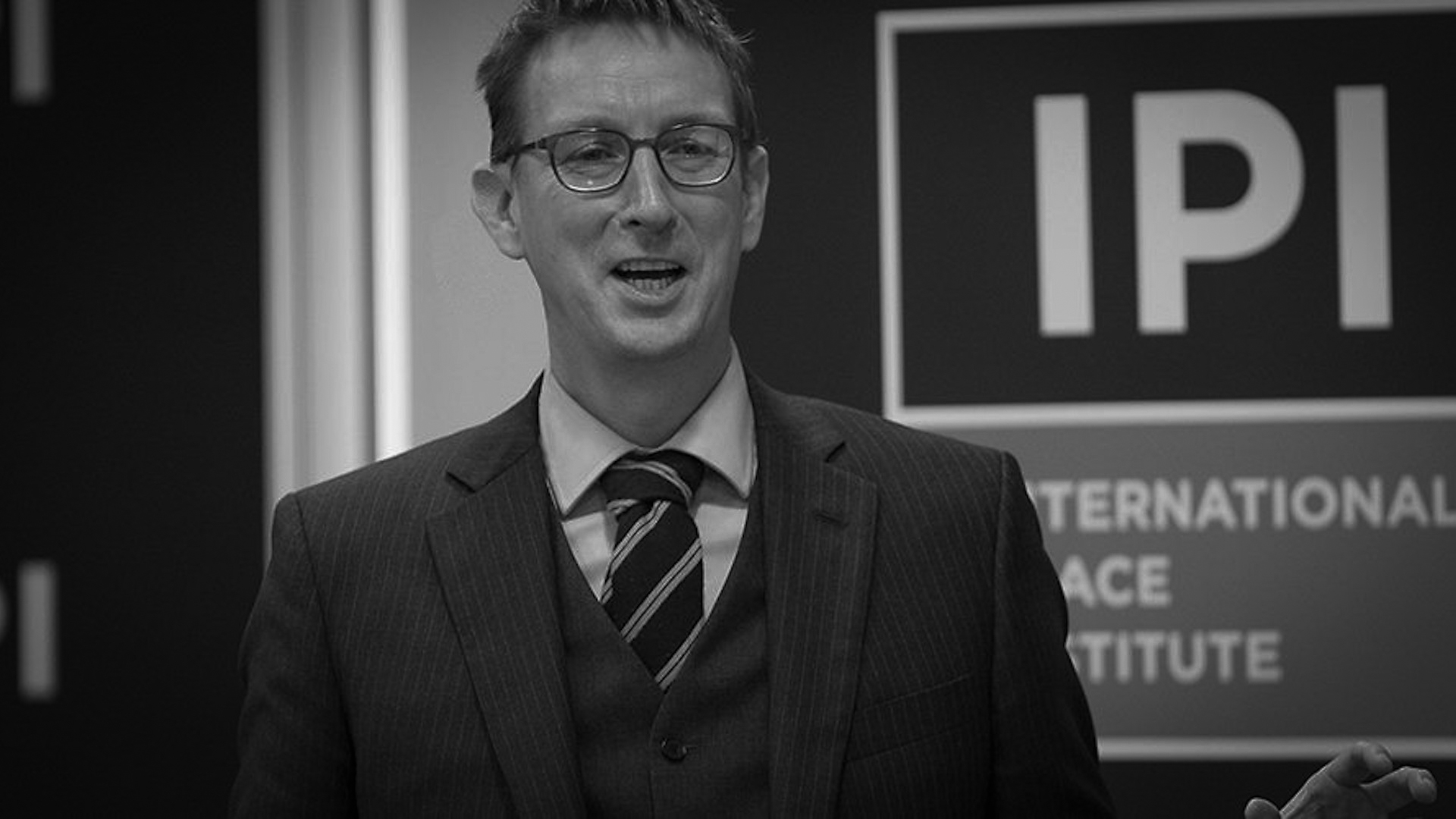
The Nobel Peace Prize is the most prestigious award of its kind in the world, and Asle Toje, a member of the committee that decides who the winners are, gave an IPI audience on September 17th an informative and entertaining glimpse into its history since it was first granted in 1901.
The prize is one of five created by Swedish industrialist Alfred Nobel, with the others in the fields of chemistry, physics, physiology, and literature. According to Nobel’s will, the peace prize should be awarded to those who have done the “most or the best work for fraternity between nations, for the abolition or reduction of standing armies, and for the holding and promotion of peace congresses.”
Dr. Toje, the youngest member of the Norwegian Nobel Committee, is a former Research Director at the Norwegian Nobel Institute in Oslo, who was educated first in Oslo before obtaining his PhD at Pembroke College in Cambridge in 2006. From 2004-2005, he was a Fulbright Fellow at Columbia University, and in 2008 became a visiting scholar at the European Union Institute for Security Studies in Paris.
Dr. Toje said he believed the prize is so highly celebrated because it “captures the imagination of humans all over the world. The Nobel Peace Prize cuts across all those things that divide us…and points to a deep urge and longing that unites us as human beings—the longing for peace, the wish not to live in conflict,” he said. “I think it says something very nice about us, as a species—that the most prestigious award in the world is a peace prize.”
Dr. Toje touched on the origins of the prize. Alfred Nobel, whom he compared to Bill Gates, had created a business empire and decided to allocate most of his fortune to the five prizes. He established three criteria for the award: peace and mediation, or those who end conflict; arms control, or those who reduce arms, abolish arms, and promote non-proliferation; and fraternity amongst nations, or those who work toward creating the preconditions for peace.
Subscribe to me on Youtube
The Europe Trilogy is being published as an audiobook on YouTube, a chapter at a time. Subscribing is the simplest way to know when the next one appears.
Subscribe